

Signs of Ectopic Pregnancy, Surgery & Pregnacare


Signs of Ectopic Pregnancy, Surgery & Pregnacare

Written by DivinHeal Editorial Contributor, Samrat Nilesh, Embryologist | Medically Reviewed by Dr Indu Priya, Gynecologist(MBBS,MD) Published on: 2026-05-29
Signs of Ectopic Pregnancy, Surgery & Pregnacare Conception: Your 2026 India Guide
An ectopic pregnancy happens in about 1–2% of pregnancies worldwide (ICMR, 2023). It occurs when the pregnancy develops outside the uterus, most often in a fallopian tube. If the tube ruptures, it can become a medical emergency very quickly and may be life-threatening. Symptoms usually start between weeks 4 and 12 of pregnancy. Recognising the early warning signs can help someone get treatment sooner and avoid a serious emergency.
This guide covers the key signs of ectopic pregnancy and what surgery involves. It also explains how long recovery takes and whether you can take Pregnacare Conception while on your period. If you are from Australia, the UK, or Nigeria, this guide is for you. It explains why India is now a top choice for care. Surgical costs are 70–85% lower than those in private clinics in Sydney, London, or Lagos.
Medically reviewed by: [Name, FRCS / MBBS] — Divinheal Clinical Advisory Panel. Last updated: May 2026.
What Are the Signs of an Ectopic Pregnancy?
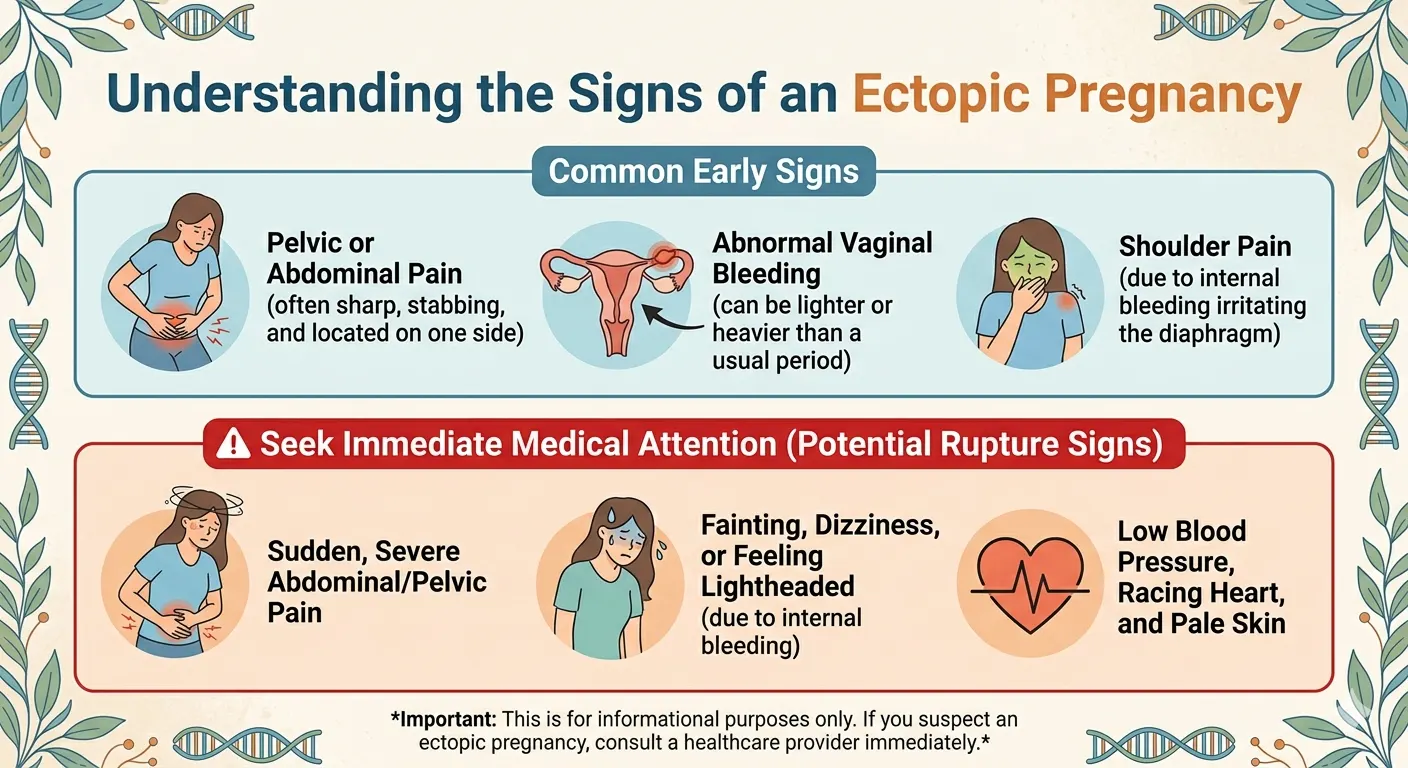
An ectopic pregnancy occurs when a fertilised egg implants outside the uterus. This happens most often in a fallopian tube — over 90% of cases (American College of Obstetricians and Gynecologists). The embryo cannot survive there. The growing tissue puts the mother at serious risk of internal bleeding.
Early signs often look like a normal pregnancy. You will get a positive test, miss your period, and feel sick or tired. But some extra symptoms point to an ectopic pregnancy. These need urgent attention.
When Does Ectopic Pregnancy Pain Start?
Ectopic pregnancy pain usually starts between weeks 4 and 12, according to the NHS — though it can start earlier. You will likely feel a sharp, lasting ache on one side of your lower abdomen. It is different from a period cramp. It is more focused and stays constant, not coming and going in waves.
If internal bleeding starts, blood can irritate your diaphragm. This sends pain up to your shoulder tip — a clear warning sign. If you also feel dizzy, weak, or faint, go to emergency care right away.
Can You Have an Ectopic Pregnancy and Not Bleed?
Yes — not all ectopic pregnancies cause vaginal bleeding. Some women only have belly pain or dizziness. When bleeding does happen, it usually looks different from a normal period. It may be darker, more watery, or irregular. Any unusual bleeding in early pregnancy — even light — needs a medical check. Don't wait.
Full List of Warning Signs to Watch For
Get urgent medical help if you have any of the following signs:
One-sided pain in the lower abdomen (sharp, persistent, or cramping)
· Shoulder tip pain — especially after lying down
- Vaginal bleeding that differs from your usual period (dark or watery)
- Dizziness, lightheadedness, or fainting
- Pain during urination or a bowel movement
- A positive pregnancy test alongside any of the above
Some women have a higher risk of ectopic pregnancy. Higher-risk groups include women with a history of:
- Ectopic pregnancies
- Pelvic inflammatory disease (PID)
- Endometriosis
- Fallopian tube surgery
The chance of a repeat ectopic is 10–15% (World Health Organization). If any of the symptoms above apply to you, go to an emergency department. Don't wait for an appointment.
Individual outcomes vary. Consult your specialist for personalised medical advice.
Ectopic Pregnancy Surgery: What to Expect
In most cases, ectopic pregnancy is treated with surgery. In stable cases, medication may be used. Surgery works faster and handles larger ectopics right away. Speed matters — a rupturing fallopian tube is a medical emergency. There is a short window to act.
In India, JCI-accredited hospitals perform ectopic surgery with FRCS-qualified or Western-trained surgeons. Apollo Hospitals (Chennai, Delhi, Mumbai) and Fortis Healthcare (Delhi, Bengaluru) are among them. The standard of care matches that of private hospitals in Melbourne or London.
How Is an Ectopic Pregnancy Diagnosed?
To diagnose an ectopic pregnancy, doctors usually rely on two key tests. The first is a blood test to check hCG, a hormone made during pregnancy. In a healthy early pregnancy, hCG levels typically rise quickly and often double about every 48 hours. If they rise more slowly than expected, it may suggest a problem (NICE guidelines, 2023). The second is a transvaginal ultrasound scan, which helps confirm where the pregnancy is located and whether it is inside the uterus or elsewhere.
Most ectopic pregnancies are found in the first trimester. If you are Rh-negative, you will get a shot called anti-D rhesus prophylaxis. This injection protects your future pregnancies from rhesus disease. All accredited Indian hospitals give this as standard care after surgery or treatment.
Salpingectomy vs Salpingostomy: Which Surgery?
Two keyhole (laparoscopic) approaches are used. Which one depends on the state of your fallopian tubes and your plans for future children:
Salpingectomy — the affected fallopian tube is removed. This is the most effective choice. If your other tube is healthy, it does not greatly reduce your chance of future pregnancy. Doctors use this approach when the tube is damaged.
Salpingostomy — the ectopic tissue is removed, and the tube is kept. This is chosen when you want to preserve future fertility, and the tube is repairable. However, there is a slightly higher risk that some ectopic tissue may remain. This may need further treatment.
Both types use small cuts of 0.5–1 cm under general anaesthetic. If the tube has already ruptured, you will need open surgery — called a laparotomy. This uses a larger cut to stop internal bleeding fast.
Surgery vs Methotrexate: Comparing Your Options
Methotrexate may be used when an ectopic pregnancy is detected early, and the patient is stable. It is given as a single injection and works best when the pregnancy is small, and there is no foetal heartbeat. The medicine stops the pregnancy from developing further, and the body gradually absorbs the tissue. Most cases respond well, but follow-up is important, with repeat blood tests over the next few weeks to ensure hCG levels are falling properly. Alcohol should also be avoided during treatment to protect the liver (NHS guidance).
Here is a direct comparison:
Feature | Surgical (Laparoscopy) | Medical (Methotrexate) |
Intervention | Keyhole surgery under general anaesthetic | Single or multiple injections (outpatient) |
Hospital stay | 1–2 nights typical | Outpatient or very short stay |
Resolution | Immediate | Weeks for hCG to drop to zero |
Future fertility | Good; 10–15% risk of recurrent ectopic | Good; similar recurrence risk |
India cost | ₹1,00,000 – ₹3,00,000 (USD 1,054–3,162) | ₹25,000 – ₹1,00,000 (USD 263–1,054) |
All costs are approximate and may vary depending on the hospital, the surgeon’s experience, and the complexity of the case. Divinheal recommends confirming the final cost with your hospital coordinator before treatment.
What to Do After Ectopic Pregnancy Surgery
Full recovery from laparoscopic ectopic surgery takes 4–6 weeks (NHS, 2022). In the first week, you may have some soreness around the incision sites, tiredness, and light vaginal discharge. Most women feel much better by week 2. By weeks 3–4, you can usually return to desk work and light daily tasks.
Your surgical team will give you written discharge notes. These cover wound care and pain management — standard paracetamol is usually enough. You will also get a list of warning signs to watch for. These include fever, heavy bleeding, or belly pain that gets worse. Any of these needs a medical review.
Before flying home, your Divinheal coordinator confirms medical clearance from your surgeon. After keyhole surgery, a minimum of 5–7 days in India is required before flying. After open surgery (laparotomy), this extends to 10–14 days. Virtual follow-up calls with your Indian specialist can be set up for 3–6 months after you leave.
Planning for a future pregnancy: about two-thirds of women conceive within 18 months of an ectopic pregnancy. This is the finding of the Royal College of Obstetricians and Gynaecologists (2016). Your specialist will advise when to try again. This is usually at least 3 months after surgery, or after methotrexate treatment.
Individual outcomes vary. Consult your specialist for personalised medical advice.
Pregnacare Conception: What It Is and How It Supports Fertility
Pregnacare Conception is a daily supplement by Vitabiotics. It is made for women trying to conceive. It contains these key nutrients:
- Folic acid: 400 mcg (the Department of Health recommended level)
- Vitamin D
- Vitamin B12
- Zinc
- Iron
- Inositol
These nutrients support healthy reproductive function (NHS, 2023).
It is not a fertility drug. It does not trigger ovulation or change your hormone cycle. Think of it as building up your body's nutrient stores. This is especially true for folic acid, which takes several weeks to build up.
Can You Take Pregnacare Conception While on Your Period?
Yes. Pregnacare Conception is for daily use throughout your full menstrual cycle — including during your period. Vitabiotics confirms you never need to pause or skip it.
It works by building nutrient levels over time — not by acting at a specific point in your cycle. It does not matter if you are on day 1 or day 28. What matters is taking it every day. Take one tablet with your main meal, with water, at the same time each day.
When Should You Start Taking Pregnacare Conception?
Start taking Pregnacare Conception as soon as you begin trying for a baby. Or start up to 3 months before, if you are planning ahead (Vitabiotics guidance). This gives folic acid and other nutrients time to reach the right levels. Once your pregnancy is confirmed, switch to a pregnancy supplement like Pregnacare Original or Pregnacare Plus.
Which Pregnacare Product Is Best for Conceiving?
Pregnacare Conception is the right product for the trying-to-conceive stage. It contains L-Methylfolate (a form of folic acid your body can use easily), inositol, and B12. These support egg quality and hormone balance. Once you are pregnant, switch to Pregnacare Max or Pregnacare Plus.
If you have a history of ectopic pregnancy or fertility treatment, talk to your fertility specialist. Go to a JCI-accredited centre in India. They will advise on whether additional supplementation is needed — such as higher-dose folic acid (5 mg).
Ectopic Pregnancy Treatment Cost: India vs Australia, UK & Nigeria
Cost is one of the main reasons patients from other countries choose India. Private care in Australia or the UK can cost tens of thousands. India's JCI-accredited hospitals offer the same quality of surgery at a much lower price. There are no waiting lists that delay urgent care in public systems.
Country | Ectopic Surgery (Private) | IVF Cycle (Private) | Currency | Savings vs India |
India (at JCI hospitals) | ₹1,00,000 – ₹3,00,000 ($1,054–3,162) | ₹1,20,000 – ₹3,50,000 ($1,265–3,690) | INR / USD | Baseline |
Australia (private) | AUD 5,000–18,000 | AUD 10,000–15,000 | AUD | 75–85% |
United Kingdom (private) | GBP 4,000–10,000 | GBP 5,000–12,000 | GBP | 70–80% |
Nigeria (private) | NGN 7,00,000–1,500,000 | NGN 1,500,000–3,500,000 | NGN | 40–60% |
All costs are approximate private healthcare ranges for 2025–2026. In Australia and the United Kingdom, treatment for an ectopic pregnancy may be covered in public hospitals through Medicare or the NHS, though waiting times may apply. The final cost can still vary depending on the hospital, surgeon, and complexity of the case.
For Australian patients: Medicare covers ectopic pregnancy as an urgent case in public hospitals. But fast access to a specialist laparoscopic surgeon can be hard in some states. Private Australian hospitals charge AUD 5,000–18,000 for the same surgery that Divinheal arranges in India for under AUD 6,300.
For Nigerian patients: Divinheal offers full visa and travel support. With the right documents, the Nigerian e-medical visa usually takes 3–5 business days. Divinheal's coordinator takes you through each step — visa forms, hospital letters, flight booking, and accommodation.
For UK patients: the NHS covers ectopic pregnancy as an urgent case. But private treatment in the UK starts at GBP 4,000. Patients who choose India get the same level of care from FRCS-trained surgeons at JCI-accredited hospitals — saving 70–80%.
Fertility Treatments in India: IVF, IUI, and Advanced ART
India has become a leading destination for assisted reproductive technology (ART) and fertility treatment. Centres such as Apollo Fertility and Fortis Bloom IVF provide internationally accredited IVF care, with success rates for women under 35 often reported at around 40–50% per embryo transfer (ICMR, 2023). These outcomes are broadly comparable to those seen in the United Kingdom and Australia.
Two fertility treatments are offered at Indian partner hospitals:
IVF (In Vitro Fertilisation) — eggs are taken from the ovaries and fertilised with sperm in a lab. They are then put into the uterus. One cycle at a JCI-accredited Indian centre costs ₹1,00,000–₹3,00,000. This is about USD 1,054–3,162 / AUD 1,465–4,395/ GBP 784–2,353/ NGN 1,430,000–4,338,324.
IUI (Intrauterine Insemination) — processed sperm is placed right into the uterus around ovulation. It is less invasive than IVF. This works well for some fertility challenges. Cost in India: ₹10,000–₹25,000 per cycle.
Treatment | India (INR) | India (USD) | Australia (AUD) | UK (GBP) |
IVF Cycle (basic) | ₹1,20,000 – ₹3,50,000 | $1,265 – $3,690 | AUD 10,000–15,000 | GBP 4,000–10,000 |
IUI Cycle | ₹10,000 – ₹25,000 | $105 – $263 | AUD 1,000–3,000 | GBP 800–1,800 |
Costs approximate. Many clinics offer packages covering consultation, diagnostics, and hospital stay. Confirm inclusions with your Divinheal coordinator.
Divinheal partner hospitals include well-known specialists such as Dr. Firuza Parikh (Jaslok Hospital, Mumbai), a leading name in Indian reproductive medicine. Many surgeons hold FRCS qualifications — this means they trained at the UK or Irish Royal Colleges.
Individual outcomes vary. Consult your specialist for personalised advice.
What Divinheal Arranges for International Patients
Divinheal handles your full journey — from first contact to follow-up after you return home. Here is what a typical package covers:
Service | What it includes |
Hospital selection | Helping match you with a JCI-accredited hospital and an experienced FRCS-qualified or specialist surgeon based on your individual case. |
Pre-arrival consultations | Arrange a virtual consultation with an Indian specialist before travel, including medical report review and a personalised treatment plan. |
Visa support | Patients from Nigeria receive step-by-step guidance for the Indian e-medical visa process, including support with the hospital invitation letter. For patients travelling from Australia & UK, the Indian e-visa process is usually completed within about 72 hours. |
Airport transfers | Private transport from the airport to your hospital or hotel, available 24/7 for a smooth and comfortable arrival. |
Accommodation | Help with arranging your hospital stay — usually 1–2 nights after laparoscopy — as well as nearby hotel accommodation for family members or a longer recovery stay if needed. |
Language support | Dedicated English-speaking coordinators are available to support you throughout your treatment, and interpreter services can also be arranged if needed. |
Post-return follow-up | Virtual follow-up consultations for up to 3–6 months post-discharge. Full medical report sent to your home GP. |
The package includes all main medical costs, such as pre-surgery consultations, blood tests, ultrasound scans, surgeon and anaesthesiologist fees, operation theatre charges, and the hospital stay. Flights, hotel accommodation outside the hospital, and personal expenses are not included.
Patient story: Adesuwa, 34, from Lagos, flew to Mumbai for ectopic pregnancy surgery after local care options were limited. 'I was terrified about going abroad for something so urgent,' she says. 'But the Divinheal coordinator called me the same day I enquired, organised the hospital appointment and visa paperwork, and met me at the airport. The surgery was done the following morning.' She was cleared to fly home 8 days after the procedure. (Composite patient story — names changed for privacy.)
Stories are illustrative composites based on typical patient journeys. Names changed for privacy.
Quick Answer — At a Glance
Skim this if you're short on time.
Signs of an ectopic pregnancy include one-sided lower abdominal pain starting around weeks 4–12, shoulder tip pain from internal bleeding, and abnormal vaginal bleeding. Ectopic pregnancy surgery in India — laparoscopic salpingectomy or salpingostomy — costs ₹1,00,000–₹3,00,000 at JCI-accredited hospitals such as Apollo or Fortis, saving Australian patients up to 85% and UK patients up to 80% versus private care at home. Recovery takes 4–6 weeks. Pregnacare Conception can be taken throughout your menstrual cycle, including during your period, and is best started 1–3 months before trying to conceive. Divinheal arranges the full treatment journey, including visa support for Nigerian patients.
Key facts:
- Ectopic pregnancy pain and symptoms can start between weeks 4 and 12 of pregnancy (NHS).
- Laparoscopic surgery usually takes around 30–90 minutes.
- Most people need about 4–6 weeks to recover after surgery.
- In India, private ectopic pregnancy surgery generally costs around ₹1,00,000–₹3,00,000 (USD 1,054–3,162).
- In Australia, private treatment can cost about AUD 5,000–18,000, while in the United Kingdom it is usually around GBP 4,000–10,000.
- Pregnacare Conception can usually be taken during your period and is often started 1–3 months before trying to conceive.
- IVF treatment in India typically costs between ₹1,20,000 and ₹3,50,000 per cycle, with success rates of around 40–50% for women under 35.
- Divinheal also provides free consultations along with travel and visa support for international patients.
All costs are approximate private healthcare ranges for 2025–2026 and can vary depending on the hospital and treatment plan. Always check the final estimate with your hospital coordinator before treatment.
An ectopic pregnancy happens in about 1–2% of pregnancies worldwide (ICMR, 2023). It occurs when the pregnancy develops outside the uterus, most often in a fallopian tube. If the tube ruptures, it can become a medical emergency very quickly and may be life-threatening. Symptoms usually start between weeks 4 and 12 of pregnancy. Recognising the early warning signs can help someone get treatment sooner and avoid a serious emergency.
This guide covers the key signs of ectopic pregnancy and
what surgery involves. It also explains how long recovery takes and whether you
can take Pregnacare Conception while on your period. If you are from Australia,
the UK, or Nigeria, this guide is for you. It explains why India is now a top
choice for care. Surgical costs are 70–85% lower than those in private clinics
in Sydney, London, or Lagos.
Medically reviewed by: [Name, FRCS / MBBS] — Divinheal
Clinical Advisory Panel. Last updated: May 2026.
What Are
the Signs of an Ectopic Pregnancy?
An ectopic pregnancy occurs when a fertilised egg implants
outside the uterus. This happens most often in a fallopian tube — over 90% of
cases (American College of Obstetricians and Gynecologists). The embryo cannot
survive there. The growing tissue puts the mother at serious risk of internal
bleeding.
Early signs often look like a normal pregnancy. You will get
a positive test, miss your period, and feel sick or tired. But some extra
symptoms point to an ectopic pregnancy. These need urgent attention.
When Does
Ectopic Pregnancy Pain Start?
Ectopic pregnancy pain usually starts between weeks 4 and
12, according to the NHS — though it can start earlier. You will likely feel a
sharp, lasting ache on one side of your lower abdomen. It is different from a
period cramp. It is more focused and stays constant, not coming and going in
waves.
If internal bleeding starts, blood can irritate your
diaphragm. This sends pain up to your shoulder tip — a clear warning sign. If
you also feel dizzy, weak, or faint, go to emergency care right away.
Can You
Have an Ectopic Pregnancy and Not Bleed?
Yes — not all ectopic pregnancies cause vaginal bleeding.
Some women only have belly pain or dizziness. When bleeding does happen, it
usually looks different from a normal period. It may be darker, more watery, or
irregular. Any unusual bleeding in early pregnancy — even light — needs a
medical check. Don't wait.
Full List
of Warning Signs to Watch For
Get urgent medical help if you have any of the following
signs:
One-sided pain in the lower abdomen (sharp, persistent, or
cramping)
·
Shoulder tip pain — especially after lying down
- Vaginal
bleeding that differs from your usual period (dark or watery)
- Dizziness,
lightheadedness, or fainting
- Pain
during urination or a bowel movement
- A
positive pregnancy test alongside any of the above
Some women have a higher risk of ectopic pregnancy. Higher-risk groups include women with a history of:
- Ectopic
pregnancies
- Pelvic
inflammatory disease (PID)
- Endometriosis
- Fallopian
tube surgery
The chance of a repeat ectopic is 10–15% (World Health Organization). If any of the symptoms above apply to you, go to an emergency department. Don't wait for an appointment.
Individual outcomes vary. Consult your specialist for
personalised medical advice.
Ectopic
Pregnancy Surgery: What to Expect
In most cases, ectopic pregnancy is treated with surgery. In
stable cases, medication may be used. Surgery works faster and handles larger
ectopics right away. Speed matters — a rupturing fallopian tube is a medical
emergency. There is a short window to act.
In India, JCI-accredited hospitals perform ectopic surgery
with FRCS-qualified or Western-trained surgeons. Apollo Hospitals (Chennai,
Delhi, Mumbai) and Fortis Healthcare (Delhi, Bengaluru) are among them. The
standard of care matches that of private hospitals in Melbourne or London.
How Is an
Ectopic Pregnancy Diagnosed?
To diagnose an ectopic pregnancy, doctors usually rely
on two key tests. The first is a blood test to check hCG, a hormone made during
pregnancy. In a healthy early pregnancy, hCG levels typically rise quickly and
often double about every 48 hours. If they rise more slowly than expected, it
may suggest a problem (NICE guidelines, 2023). The second is a transvaginal
ultrasound scan, which helps confirm where the pregnancy is located and whether
it is inside the uterus or elsewhere.
Most ectopic pregnancies are found in the first trimester.
If you are Rh-negative, you will get a shot called anti-D rhesus prophylaxis.
This injection protects your future pregnancies from rhesus disease. All
accredited Indian hospitals give this as standard care after surgery or
treatment.
Salpingectomy
vs Salpingostomy: Which Surgery?
Two keyhole (laparoscopic) approaches are used. Which one
depends on the state of your fallopian tubes and your plans for future
children:
Salpingectomy — the affected fallopian tube is removed. This
is the most effective choice. If your other tube is healthy, it does not
greatly reduce your chance of future pregnancy. Doctors use this approach when
the tube is damaged.
Salpingostomy — the ectopic tissue is removed, and the tube
is kept. This is chosen when you want to preserve future fertility, and the
tube is repairable. However, there is a slightly higher risk that some ectopic
tissue may remain. This may need further treatment.
Both types use small cuts of 0.5–1 cm under general
anaesthetic. If the tube has already ruptured, you will need open surgery —
called a laparotomy. This uses a larger cut to stop internal bleeding fast.
Surgery
vs Methotrexate: Comparing Your Options
Methotrexate may be used when an ectopic pregnancy is
detected early, and the patient is stable. It is given as a single injection
and works best when the pregnancy is small, and there is no foetal heartbeat.
The medicine stops the pregnancy from developing further, and the body
gradually absorbs the tissue. Most cases respond well, but follow-up is
important, with repeat blood tests over the next few weeks to ensure hCG levels
are falling properly. Alcohol should also be avoided during treatment to
protect the liver (NHS guidance).
Here is a direct comparison:
|
Feature |
Surgical
(Laparoscopy) |
Medical
(Methotrexate) |
|
Intervention |
Keyhole
surgery under general anaesthetic |
Single
or multiple injections (outpatient) |
|
Hospital
stay |
1–2
nights typical |
Outpatient
or very short stay |
|
Resolution |
Immediate |
Weeks
for hCG to drop to zero |
|
Future
fertility |
Good;
10–15% risk of recurrent ectopic |
Good;
similar recurrence risk |
|
India
cost |
₹1,00,000
– ₹3,00,000 (USD 1,054–3,162) |
₹25,000
– ₹1,00,000 (USD 263–1,054) |
All costs are approximate and may vary depending on the
hospital, the surgeon’s experience, and the complexity of the case. Divinheal
recommends confirming the final cost with your hospital coordinator before
treatment.
What to
Do After Ectopic Pregnancy Surgery
Full recovery from laparoscopic ectopic surgery takes 4–6
weeks (NHS, 2022). In the first week, you may have some soreness around the
incision sites, tiredness, and light vaginal discharge. Most women feel much
better by week 2. By weeks 3–4, you can usually return to desk work and light
daily tasks.
Your surgical team will give you written discharge notes.
These cover wound care and pain management — standard paracetamol is usually
enough. You will also get a list of warning signs to watch for. These include
fever, heavy bleeding, or belly pain that gets worse. Any of these needs a
medical review.
Before flying home, your Divinheal coordinator confirms
medical clearance from your surgeon. After keyhole surgery, a minimum of 5–7
days in India is required before flying. After open surgery (laparotomy), this
extends to 10–14 days. Virtual follow-up calls with your Indian specialist can
be set up for 3–6 months after you leave.
Planning for a future pregnancy: about two-thirds of women
conceive within 18 months of an ectopic pregnancy. This is the finding of the
Royal College of Obstetricians and Gynaecologists (2016). Your specialist will
advise when to try again. This is usually at least 3 months after surgery, or
after methotrexate treatment.
Individual outcomes vary. Consult your specialist for
personalised medical advice.
Pregnacare
Conception: What It Is and How It Supports Fertility
Pregnacare Conception is a daily supplement by Vitabiotics.
It is made for women trying to conceive. It contains these key nutrients:
- Folic
acid: 400 mcg (the Department of Health recommended level)
- Vitamin
D
- Vitamin
B12
- Zinc
- Iron
- Inositol
These nutrients support healthy reproductive function (NHS, 2023).
It is not a fertility drug. It does not trigger ovulation or
change your hormone cycle. Think of it as building up your body's nutrient
stores. This is especially true for folic acid, which takes several weeks to
build up.
Can You
Take Pregnacare Conception While on Your Period?
Yes. Pregnacare Conception is for daily use throughout your
full menstrual cycle — including during your period. Vitabiotics confirms you
never need to pause or skip it.
It works by building nutrient levels over time — not by
acting at a specific point in your cycle. It does not matter if you are on day
1 or day 28. What matters is taking it every day. Take one tablet with your
main meal, with water, at the same time each day.
When
Should You Start Taking Pregnacare Conception?
Start taking Pregnacare Conception as soon as you begin
trying for a baby. Or start up to 3 months before, if you are planning ahead
(Vitabiotics guidance). This gives folic acid and other nutrients time to reach
the right levels. Once your pregnancy is confirmed, switch to a pregnancy
supplement like Pregnacare Original or Pregnacare Plus.
Which
Pregnacare Product Is Best for Conceiving?
Pregnacare Conception is the right product for the
trying-to-conceive stage. It contains L-Methylfolate (a form of folic acid your
body can use easily), inositol, and B12. These support egg quality and hormone
balance. Once you are pregnant, switch to Pregnacare Max or Pregnacare Plus.
If you have a history of ectopic pregnancy or fertility
treatment, talk to your fertility specialist. Go to a JCI-accredited centre in
India. They will advise on whether additional supplementation is needed — such
as higher-dose folic acid (5 mg).
Ectopic
Pregnancy Treatment Cost: India vs Australia, UK & Nigeria
Cost is one of the main reasons patients from other
countries choose India. Private care in Australia or the UK can cost tens of
thousands. India's JCI-accredited hospitals offer the same quality of surgery
at a much lower price. There are no waiting lists that delay urgent care in
public systems.
|
Country |
Ectopic
Surgery (Private) |
IVF
Cycle (Private) |
Currency |
Savings
vs India |
|
India
(at JCI hospitals) |
₹1,00,000
– ₹3,00,000 ($1,054–3,162) |
₹1,20,000
– ₹3,50,000 ($1,265–3,690) |
INR /
USD |
Baseline |
|
Australia
(private) |
AUD 5,000–18,000 |
AUD
10,000–15,000 |
AUD |
75–85% |
|
United
Kingdom (private) |
GBP 4,000–10,000 |
GBP
5,000–12,000 |
GBP |
70–80% |
|
Nigeria
(private) |
NGN 7,00,000–1,500,000 |
NGN 1,500,000–3,500,000 |
NGN |
40–60% |
All costs are approximate private healthcare ranges for
2025–2026. In Australia and the United Kingdom, treatment for an ectopic
pregnancy may be covered in public hospitals through Medicare or the NHS,
though waiting times may apply. The final cost can still vary depending on the
hospital, surgeon, and complexity of the case.
For Australian patients: Medicare covers ectopic pregnancy
as an urgent case in public hospitals. But fast access to a specialist
laparoscopic surgeon can be hard in some states. Private Australian hospitals
charge AUD 5,000–18,000 for the same surgery that Divinheal arranges in India
for under AUD 6,300.
For Nigerian patients: Divinheal offers full visa and travel
support. With the right documents, the Nigerian e-medical visa usually takes
3–5 business days. Divinheal's coordinator takes you through each step — visa
forms, hospital letters, flight booking, and accommodation.
For UK patients: the NHS covers ectopic pregnancy as an
urgent case. But private treatment in the UK starts at GBP 4,000. Patients who
choose India get the same level of care from FRCS-trained surgeons at
JCI-accredited hospitals — saving 70–80%.
Fertility
Treatments in India: IVF, IUI, and Advanced ART
India has become a leading destination for assisted
reproductive technology (ART) and fertility treatment. Centres such as Apollo
Fertility and Fortis Bloom IVF provide internationally accredited IVF care,
with success rates for women under 35 often reported at around 40–50% per
embryo transfer (ICMR, 2023). These outcomes are broadly comparable to those
seen in the United Kingdom and Australia.
Two fertility treatments are offered at Indian partner
hospitals:
IVF (In Vitro Fertilisation) — eggs are taken from the
ovaries and fertilised with sperm in a lab. They are then put into the uterus.
One cycle at a JCI-accredited Indian centre costs ₹1,00,000–₹3,00,000. This is
about USD 1,054–3,162 / AUD 1,465–4,395/ GBP 784–2,353/ NGN 1,430,000–4,338,324.
IUI (Intrauterine Insemination) — processed sperm is placed
right into the uterus around ovulation. It is less invasive than IVF. This
works well for some fertility challenges. Cost in India: ₹10,000–₹25,000 per
cycle.
|
Treatment |
India
(INR) |
India
(USD) |
Australia
(AUD) |
UK
(GBP) |
|
IVF
Cycle (basic) |
₹1,20,000
– ₹3,50,000 |
$1,265
– $3,690 |
AUD
10,000–15,000 |
GBP 4,000–10,000 |
|
IUI
Cycle |
₹10,000
– ₹25,000 |
$105 –
$263 |
AUD
1,000–3,000 |
GBP 800–1,800 |
Costs approximate. Many clinics offer packages covering
consultation, diagnostics, and hospital stay. Confirm inclusions with your
Divinheal coordinator.
Divinheal partner hospitals include well-known specialists
such as Dr. Firuza Parikh (Jaslok Hospital, Mumbai), a leading name in Indian
reproductive medicine. Many surgeons hold FRCS qualifications — this means they
trained at the UK or Irish Royal Colleges.
Individual outcomes vary. Consult your specialist for
personalised advice.
What
Divinheal Arranges for International Patients
Divinheal handles your full journey — from first contact to
follow-up after you return home. Here is what a typical package covers:
|
Service |
What
it includes |
|
Hospital
selection |
Helping match you with a JCI-accredited hospital and
an experienced FRCS-qualified or specialist surgeon based on your individual
case. |
|
Pre-arrival
consultations |
Arrange a virtual consultation with an Indian
specialist before travel, including medical report review and a personalised
treatment plan. |
|
Visa
support |
Patients from Nigeria receive step-by-step guidance
for the Indian e-medical visa process, including support with the hospital
invitation letter. For patients travelling from Australia & UK, the
Indian e-visa process is usually completed within about 72 hours. |
|
Airport
transfers |
Private transport from the airport to your hospital
or hotel, available 24/7 for a smooth and comfortable arrival. |
|
Accommodation |
Help with arranging your hospital stay — usually 1–2
nights after laparoscopy — as well as nearby hotel accommodation for family
members or a longer recovery stay if needed. |
|
Language
support |
Dedicated English-speaking coordinators are available
to support you throughout your treatment, and interpreter services can also
be arranged if needed. |
|
Post-return
follow-up |
Virtual
follow-up consultations for up to 3–6 months post-discharge. Full medical
report sent to your home GP. |
The package includes all main medical costs, such as
pre-surgery consultations, blood tests, ultrasound scans, surgeon and
anaesthesiologist fees, operation theatre charges, and the hospital stay.
Flights, hotel accommodation outside the hospital, and personal expenses are
not included.
Patient story: Adesuwa, 34, from Lagos, flew to Mumbai for ectopic pregnancy surgery after local care options were limited. 'I was terrified about going abroad for something so urgent,' she says. 'But the Divinheal coordinator called me the same day I enquired, organised the hospital appointment and visa paperwork, and met me at the airport. The surgery was done the following morning.' She was cleared to fly home 8 days after the procedure. (Composite patient story — names changed for privacy.)
Stories are illustrative composites based on typical patient journeys. Names changed for privacy.
Quick Answer — At a Glance
Skim this if you're short on time.
Signs of an ectopic pregnancy include one-sided lower
abdominal pain starting around weeks 4–12, shoulder tip pain from internal
bleeding, and abnormal vaginal bleeding. Ectopic pregnancy surgery in India —
laparoscopic salpingectomy or salpingostomy — costs ₹1,00,000–₹3,00,000 at
JCI-accredited hospitals such as Apollo or Fortis, saving Australian patients
up to 85% and UK patients up to 80% versus private care at home. Recovery takes
4–6 weeks. Pregnacare Conception can be taken throughout your menstrual cycle,
including during your period, and is best started 1–3 months before trying to
conceive. Divinheal arranges the full treatment journey, including visa support
for Nigerian patients.
Key facts:
- Ectopic pregnancy
pain and symptoms can start between weeks 4 and 12 of pregnancy (NHS).
- Laparoscopic
surgery usually takes around 30–90 minutes.
- Most people need
about 4–6 weeks to recover after surgery.
- In India, private
ectopic pregnancy surgery generally costs around ₹1,00,000–₹3,00,000 (USD
1,054–3,162).
- In Australia,
private treatment can cost about AUD 5,000–18,000, while in the United
Kingdom it is usually around GBP 4,000–10,000.
- Pregnacare
Conception can usually be taken during your period and is often started
1–3 months before trying to conceive.
- IVF treatment in
India typically costs between ₹1,20,000 and ₹3,50,000 per cycle, with
success rates of around 40–50% for women under 35.
- Divinheal also
provides free consultations along with travel and visa support for
international patients.
All costs are approximate private healthcare ranges for
2025–2026 and can vary depending on the hospital and treatment plan. Always
check the final estimate with your hospital coordinator before treatment.
Plan My Journey
Tell us your condition and budget — our AI matches the right destination, hospital and doctor and visa pathway
Cost Calculator
I know my treatment — show me cost from 3 hospitals
Plan My Journey
Tell us your condition and budget — our AI matches the right destination, hospital and doctor and visa pathway
Cost Calculator
I know my treatment — show me cost from 3 hospitals
Recommended Article


IVF Treatment in Haryana | Cost, Hospitals & Doctors
IVF Treatment in Haryana | Cost, Hospitals & Doctors
IVF Treatment in Haryana | Cost, Hospitals & Doctors
IVF Treatment in Haryana | Cost, Hospitals & Doctors
IVF Treatment in Haryana | Cost, Hospitals & Doctors
IVF Treatment in Haryana | Cost, Hospitals & Doctors
IVF Treatment in Haryana | Cost, Hospitals & Doctors
IVF Treatment in Haryana | Cost, Hospitals & Doctors
IVF Treatment in Haryana | Cost, Hospitals & Doctors
IVF Treatment in Haryana | Cost, Hospitals & Doctors
Written by DivinHeal Editorial Contributor, Samrat Nilesh, Embryologist | Medically Reviewed by Dr Indu Priya, Gynecologist(MBBS,MD) Published on: 2026-05-29
Plan My Journey
Tell us your condition and budget — our AI matches the right destination, hospital and doctor and visa pathway
Cost Calculator
I know my treatment — show me cost from 3 hospitals
Booking With DIVINHEAL
Get a free consultation to understand your treatment options
Recommended Article
IVF Treatment in Haryana | Cost, Hospitals & Doctors
IVF Treatment in Haryana | Cost, Hospitals & Doctors
IVF Treatment in Haryana | Cost, Hospitals & Doctors
IVF Treatment in Haryana | Cost, Hospitals & Doctors
IVF Treatment in Haryana | Cost, Hospitals & Doctors
IVF Treatment in Haryana | Cost, Hospitals & Doctors
IVF Treatment in Haryana | Cost, Hospitals & Doctors
IVF Treatment in Haryana | Cost, Hospitals & Doctors
IVF Treatment in Haryana | Cost, Hospitals & Doctors
IVF Treatment in Haryana | Cost, Hospitals & Doctors
From Consultation to Recovery,
Step by Step
Expert Specialist Matching
Connecting you with the world's top-rated medical experts.
Accredited Hospital Network
Access to JCI & NABH certified healthcare facilities.
Complete Travel Coordination
Hassle-free visa, stay, and local transport assistance.
24/7 Personal Care
Dedicated patient advisors supporting you at every step.
Journey Guidance
Full guidance from start to end of the patient treatment journey.
Expert Specialist Matching
Connecting you with the world's top-rated medical experts.
Everything you
need to know today
Browse through these common inquiries to better understand our patient-focused medical platform.
Most women tolerate it well. Some feel mild stomach side effects such as nausea, constipation, or an upset stomach. This is more likely if the tablet is taken on an empty stomach. Taking it with your main meal (as directed) lowers this risk. If symptoms don't improve, speak to your GP or fertility specialist.
Pregnacare Conception is designed for the trying-to-conceive stage. It contains these key nutrients to support ovulation and reproductive function: • Folic acid: 400 mcg (the Department of Health recommended level) • L-Methylfolate • Inositol • Vitamin B12 • Zinc • Vitamin D Once you are pregnant, switch to Pregnacare Max or Pregnacare Plus.
Keyhole (laparoscopic) ectopic surgery is minimally invasive. It uses small cuts and a general anaesthetic. Most patients go home within 1–2 days. If the fallopian tube has already ruptured, open surgery (laparotomy) is needed instead. This uses a larger cut and means a longer hospital stay of 3–5 days. Both need a 4–6 week recovery overall.
Keyhole ectopic surgery usually takes 30 to 90 minutes (NHS / Hull University Teaching Hospitals guidance). This depends on how complex the case is. If a laparotomy is needed — for example, after a rupture — it takes longer. You will spend 1–2 hours in recovery before going back to the ward.
Yes. Take Pregnacare Conception every day throughout your monthly cycle — including during your period. Vitabiotics confirms no pause is needed. One tablet a day with your main meal is all you need. It works by building nutrient reserves over weeks, not at one specific moment in your cycle.
Start as soon as you begin trying for a baby. Or start up to 3 months before, if you can (Vitabiotics guidance). Folic acid needs time to build up to protective levels. Once your pregnancy is confirmed, switch to a pregnancy-specific product such as Pregnacare Original or Plus.
In rare cases, yes. A very small ectopic pregnancy may resolve without treatment. Doctors call this expectant management. It is only right when all three of these apply: No symptoms are present hCG levels are falling The pregnancy cannot be found on an ultrasound (NHS guidance) It needs close monitoring with regular blood tests. This is not a home remedy — it is a supervised clinical decision.
Signs of an ectopic pregnancy can appear as early as 4 weeks, according to NHS guidelines. Most women don't notice symptoms until weeks 6–8. Some women have no symptoms at all until the tube ruptures. That's why early ultrasound is advised if you have any risk factors or unusual symptoms in early pregnancy.
An untreated ectopic pregnancy can cause the fallopian tube to rupture. This leads to severe internal bleeding, shock, and a life-threatening emergency. It needs immediate surgery. If you have a positive pregnancy test, watch for these signs: one-sided belly pain, shoulder tip pain, or dizziness. Any of these means go to an emergency department right away.
Keyhole ectopic surgery in India at a JCI-accredited hospital costs ₹1,00,000–₹3,00,000 (about USD 1,054–3,162 or AUD 1,465–4,396). Australian private hospitals charge AUD 5,000–18,000 for the same surgery. UK private hospitals charge GBP 4,000–10,000. Nigeria charges NGN 700,000–1,500,000. This means you save 40–85%, depending on where you live.
Most surgeons advise waiting at least 5–7 days after keyhole surgery before flying. After open surgery (laparotomy), this extends to 10–14 days. Air travel raises the risk of deep vein thrombosis. Your surgeon will confirm clearance before you book your flight. Divinheal handles this medical clearance as part of the discharge process.
Divinheal arranges hospital selection, surgeon matching, and virtual pre-travel consultations. Visa support is included — with step-by-step e-medical visa guidance for Nigerian patients. On the ground, you get airport transfers, a place to stay, and an English-speaking coordinator. Virtual follow-up calls are available for up to 6 months after you return home. There's no upfront fee — contact Divinheal for a free consultation.
Still have more questions?
Book a call with our friendly team to learn how DivineHeal simplifies your healthcare journey.


